From Milan to Modern Millinery
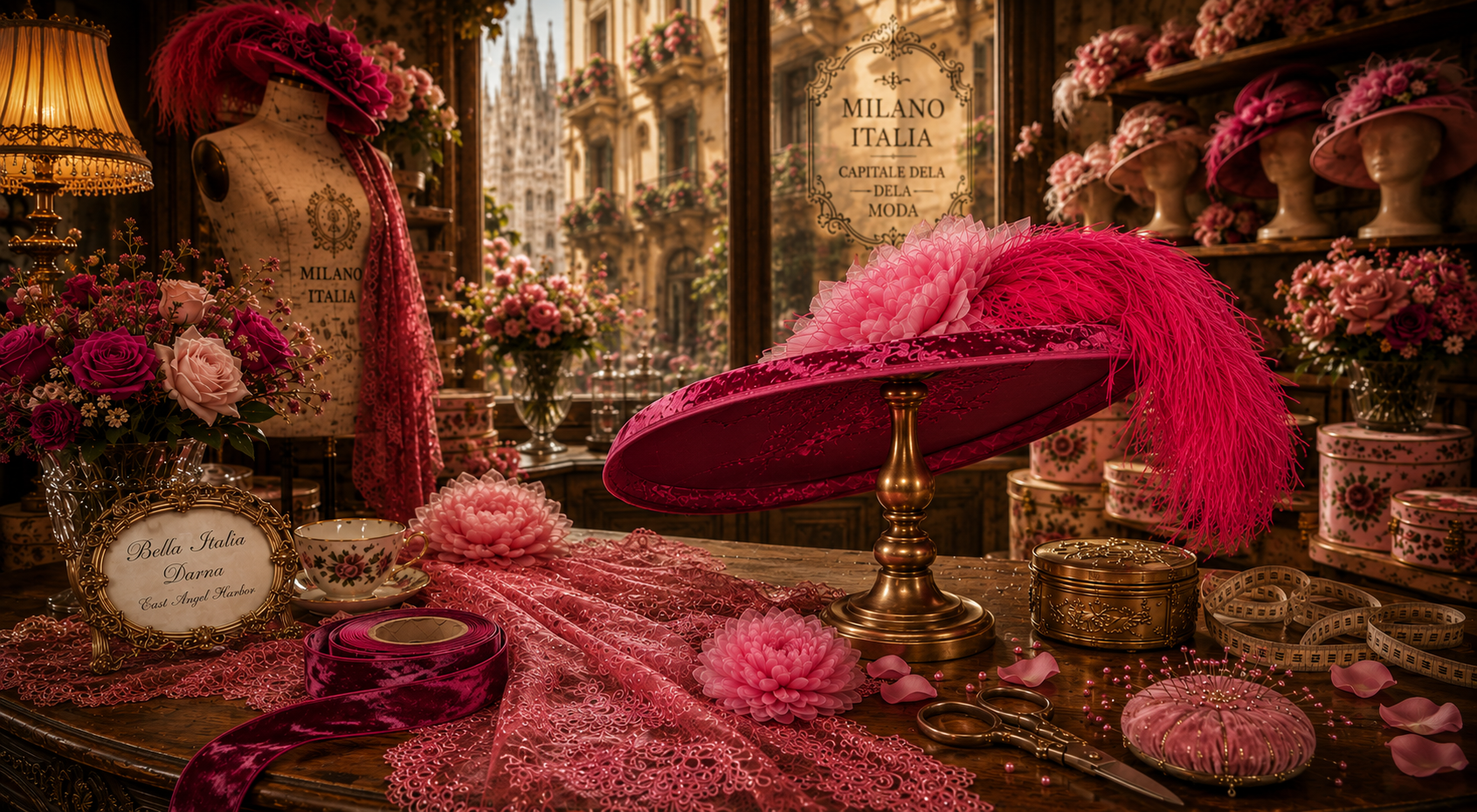
Welcome to a world where lace, velvet, silk, and feathers become timeless works of art. Before a hat is ever finished, it begins with inspiration, history, and the skilled hands of a milliner. Step into my studio, where the romance of Italy, the elegance of Milan, and centuries of craftsmanship come together to inspire every creation. Today, I'd love to share the beautiful story behind one of my newest designs—Signorina Rosa Prima.
For centuries, Italy has been synonymous with artistry, luxury, and impeccable style. From the opulent courts of the Renaissance to the glamorous runways of Milan, Italian design has shaped the world of fashion in ways few countries can rival. While Paris is often celebrated for haute couture, the art of millinery—the design and creation of beautiful hats—owes much of its heritage to Italy's extraordinary tradition of craftsmanship.
Today, when people hear the word millinery, many immediately think of Milan, one of the world's great fashion capitals. This association is no coincidence. Italy's influence on hat design stretches back hundreds of years, inspiring generations of designers to transform simple headwear into wearable works of art.
The Birth of Italian Elegance
During the Renaissance, Florence, Venice, and Milan became centers of artistic innovation. Wealthy noblewomen adorned themselves with elaborate headdresses decorated with silk, lace, ribbons, jewels, and delicate embroidery. These weren't merely accessories—they were symbols of status, refinement, and artistic expression.
Italian artisans became renowned for producing luxurious silks, velvets, brocades, and intricate lace. These exquisite textiles eventually found their way into hatmaking, allowing milliners to create increasingly elaborate designs that became coveted throughout Europe.
Why Milan Became the Heart of Millinery
The word milliner actually originated from the English term "Milaner," referring to merchants who imported luxurious goods from Milan during the 16th century. These merchants became famous for selling fine Italian ribbons, silks, lace, feathers, gloves, jewelry, and fashionable accessories.
Over time, the spelling evolved from Milaner to Milliner, but its Italian roots remain.
This fascinating history reminds us that the very profession of millinery carries Milan's legacy in its name. Even today, Milan continues to inspire designers through its celebrated Fashion Week and its dedication to exceptional craftsmanship, innovation, and timeless style.
Italian Design: A Celebration of Beauty
Italian fashion has always embraced bold color, dramatic silhouettes, and meticulous attention to detail. Rather than following fleeting trends, Italian designers have consistently created pieces that celebrate beauty, femininity, and artistry.
Many classic Italian millinery elements continue to appear in contemporary designs:
Elegant sinamay foundations
Rich silks and satins
Romantic lace
Handcrafted flowers
Luxurious ostrich feathers
Sculptural bows
Bold yet sophisticated color palettes
These timeless design principles continue to inspire milliners around the world—including my own studio.
Introducing Signorina Rosa Prima

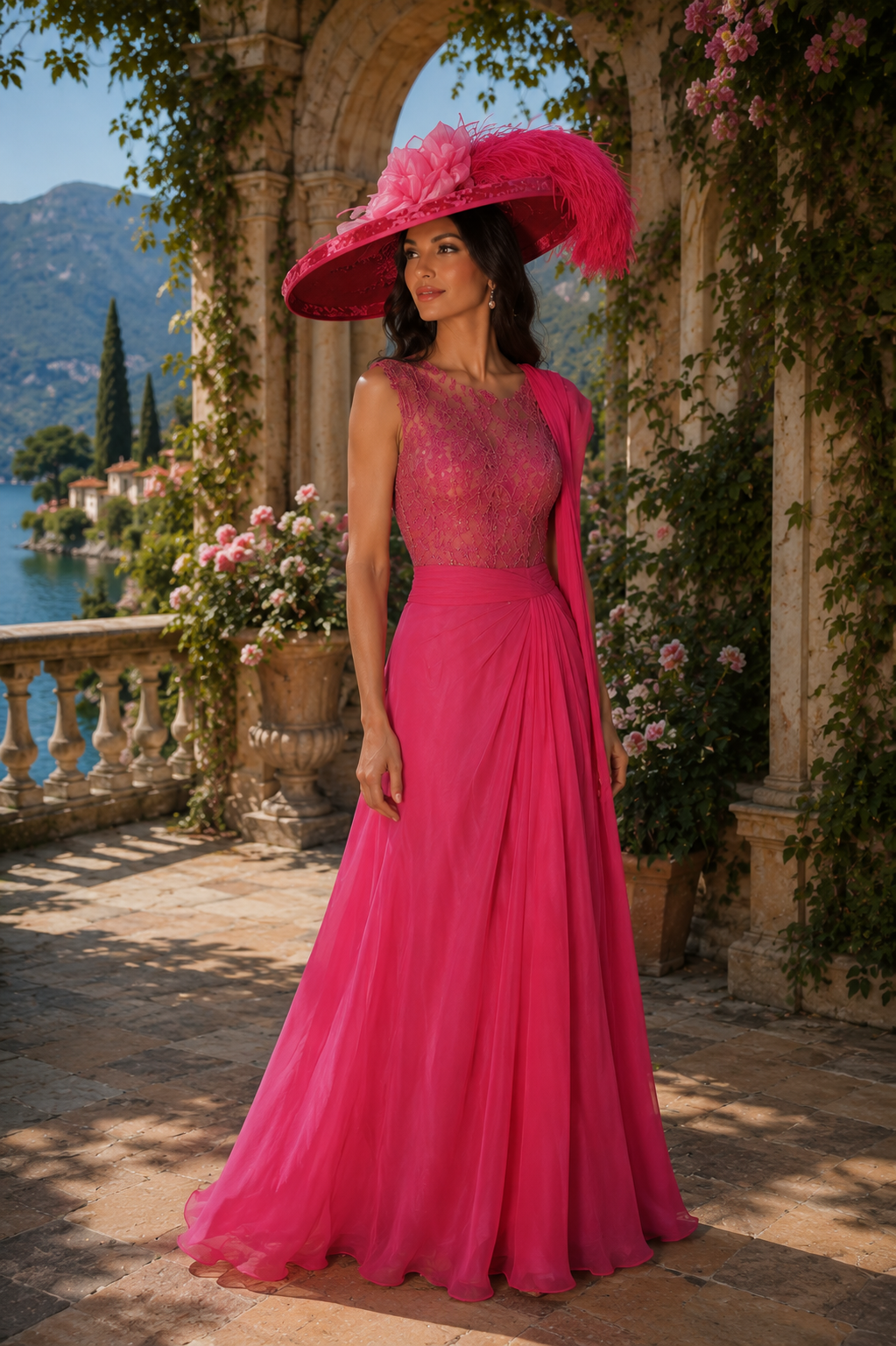
Inspired by Italy's love of romance, elegance, and artistic expression, I recently created one of the newest additions to my Bella Italia Collection—the Signorina Rosa Prima.
Like a vibrant Italian garden in full bloom, this dramatic fascinator celebrates joyful color and graceful sophistication.
Its striking 22-inch sinamay hatinator forms a magnificent foundation in radiant hot pink. Intricate lace appliqués adorn both the inner and outer brims, adding layers of texture and refined detail. At the crown rests a breathtaking hot pink rose surrounded by luxurious fuchsia ostrich feathers that gently sway with every movement, creating a sense of effortless elegance.
Rather than simply accessorizing an outfit, Signorina Rosa Prima is designed to become the centerpiece—an expression of confidence, artistry, and timeless femininity.
Every design I create at East Angel Harbor reflects my passion for traditional millinery techniques while embracing the beauty that has made Italian fashion legendary for generations.
The Legacy Lives On
Although fashion continually evolves, the principles that made Italian design famous remain unchanged: exceptional craftsmanship, luxurious materials, artistic vision, and an appreciation for beauty in every detail.
From the Renaissance workshops of Florence to the elegant boutiques of Milan, Italy has inspired countless generations of milliners—including myself.
Whenever I begin designing a new hat, I remember that every ribbon carefully placed, every flower hand-positioned, and every feather thoughtfully arranged continues a tradition that has flourished for centuries.
That enduring legacy is one of the many reasons I continue to find inspiration in the remarkable history of Italian millinery.
After all, true elegance never goes out of style.